

Stop Answering Questions You Were Not Asked
By Ubong Essien, CSP
Dean, School of Eloquence
West Africa’s Only Certified Speaking Professional
Author, Speak with Power
Let me say something uncomfortable.
Many public figures lose credibility because they over-answer.
Not because they lack intelligence.
But because they lack discipline.
In interviews, panels, and press briefings, one mistake is common:
They answer more than necessary.
And in doing so, they create problems that did not exist.
The Discipline of Listening
The first skill in any high-level interview is not speaking.
It is listening.
What exactly was asked?
What is the scope of the question?
Is it about policy?
Is it about timeline?
Is it about accountability?
Is it about speculation?
If you do not define the scope internally, you may wander.
And wandering exposes vulnerability.
Over-Explaining Signals Insecurity
When a leader answers a simple question with a five-minute explanation, the audience senses something.
Either:
- You are avoiding clarity.
- You are unsure.
- You are compensating.
Strong communicators answer directly.
Then stop.
Silence after a complete answer signals confidence.
Do Not Volunteer Ammunition
This is critical.
If a journalist asks about one issue, do not introduce three more.
If you are asked about a policy timeline, do not introduce internal disagreements.
If you are asked about one allegation, do not open the door to unrelated controversies.
Precision protects you.
Excess exposes you.
Structure Your Response
Professional responses follow a tight pattern:
- Acknowledge the question.
- Answer directly.
- Provide one supporting clarification.
- Conclude confidently.
Then stop.
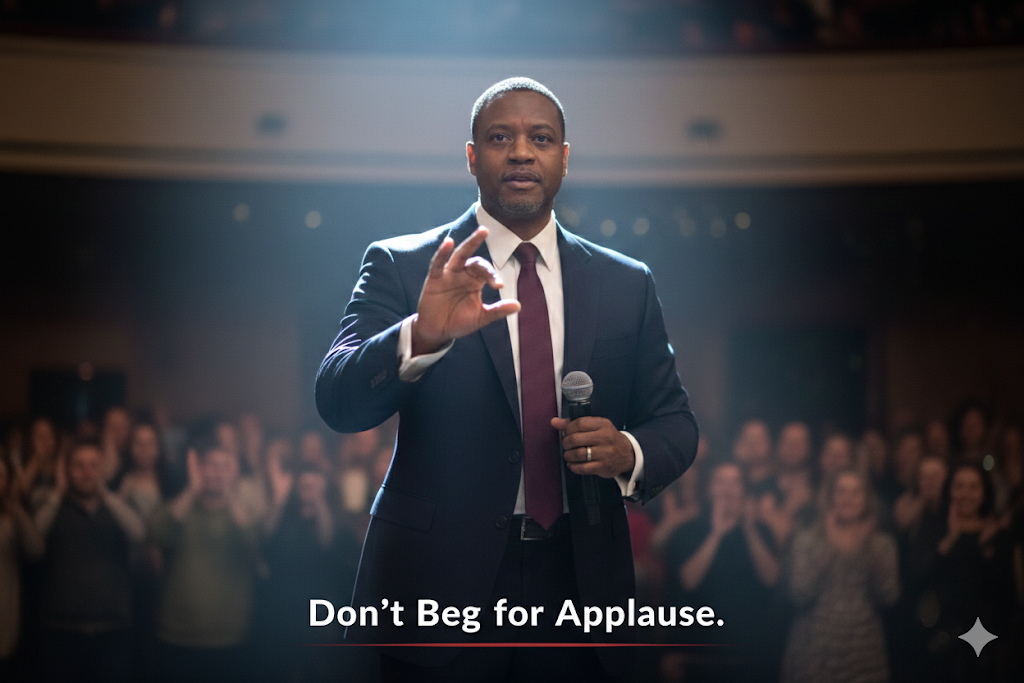
Do not chase applause.
Do not chase validation.
Do not chase over-explanation.
Authority rests in restraint.
The Power of the Controlled Pivot
If a question attempts to drag you into speculation, you can redirect without appearing evasive.
For example:
“What I can confirm is…”
“That is not the focus at this time. What matters is…”
“This administration remains committed to…”
That is disciplined communication.
Not avoidance.
The Hard Truth
If you speak without boundaries, you create your own crisis.
Most communication damage does not come from hostile questions.
It comes from careless answers.
Professional communicators do not just prepare content.
They train discipline.
Inside the School of Eloquence advanced media coaching, we teach leaders to master structured brevity.
Because the most powerful answer is often the shortest complete one.
And in public communication, less is often stronger.
Stay in the loop